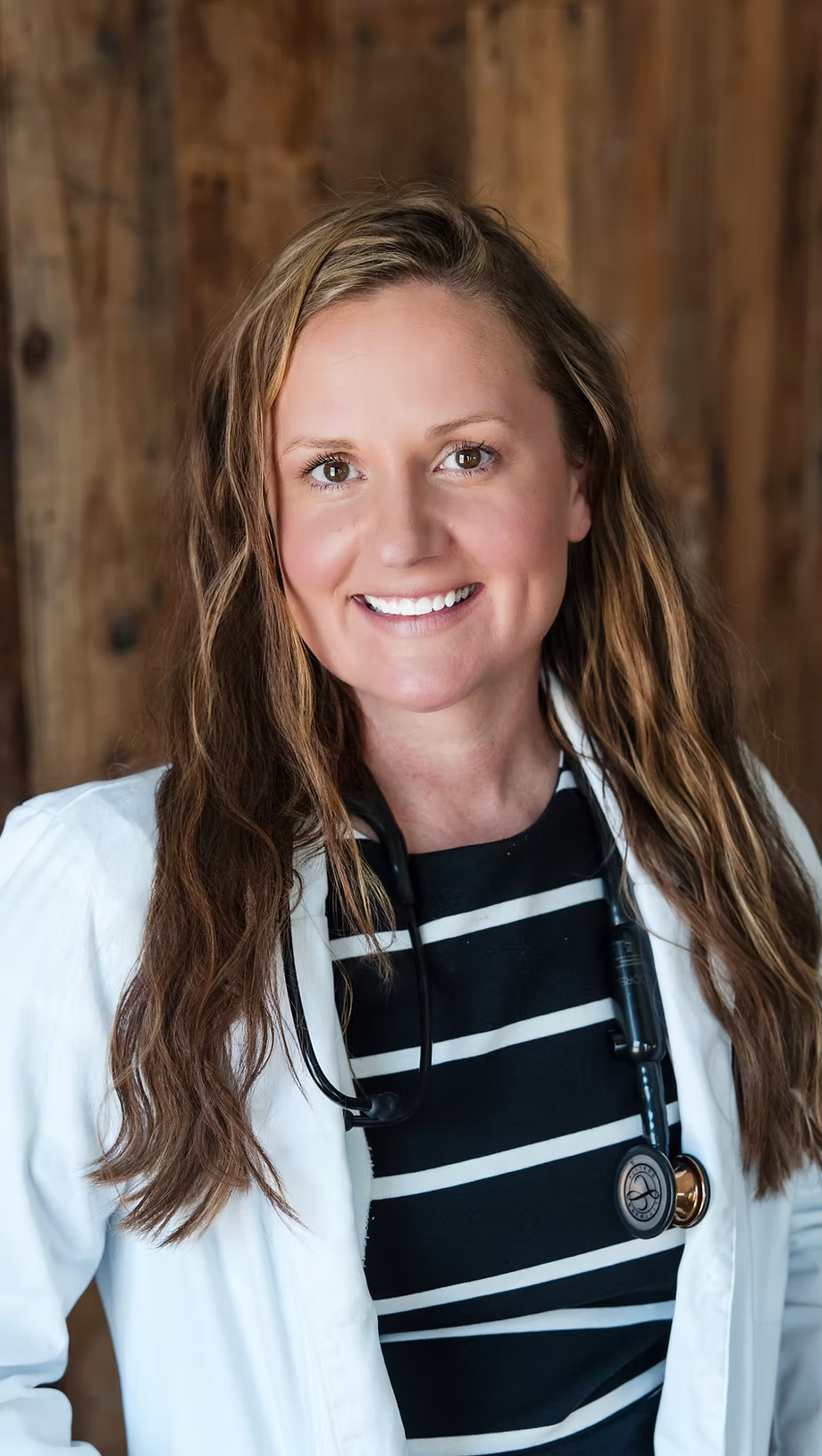
Kim Wohlwend, MSN, APRN
Founder & Lead Clinician · Dual ANCC Board-Certified (FNP-BC, PMHNP-BC)
Kim's clinical work centers on GLP-1 medical weight loss, hormone health, and the mental-health side of metabolism. Dual ANCC board certification means medication interactions, sleep, thyroid status, hormone shifts, and mood are evaluated alongside weight, rather than treated as separate problems by separate providers. That integrated lens matters in Bridge prescribing, where patients often arrive on multiple daily medications and need a clinician who reads the full picture before adjusting anything.
Read full bio → · Last clinically reviewed July 3, 2026
The Medicare GLP-1 Bridge Program is a CMS demonstration that, for the first time, gives eligible Medicare Part D beneficiaries access to FDA-approved GLP-1 medications for chronic weight management at a flat $50 per month medication copay. The $50 covers the drug itself; visits with the prescribing provider are in addition and are billed through Medicare. The program is live: it took effect July 1, 2026 and runs through December 31, 2027. It covers three medications: Wegovy (semaglutide), Zepbound (tirzepatide), and Foundayo (orforglipron, the first oral GLP-1 pill for weight loss).
Before the Bridge, traditional Medicare did not cover GLP-1 medications when prescribed for weight loss. Medicare patients wanting Wegovy or Zepbound for chronic weight management typically paid full retail price, often $1,000 to $1,500 per month, putting these medications out of reach for most fixed-income beneficiaries. The Bridge changes that dynamic for the duration of the demonstration.
At Midwest Mind and Body Healthcare, we prescribe under the Bridge Program for eligible Medicare beneficiaries from our Papillion, Nebraska office and by secure telehealth across 16 states, and we are scheduling Bridge eligibility visits now. Per CMS guidance, providers do not need to be enrolled in Medicare to write a prescription or submit a prior authorization under the Bridge, which means access to Bridge coverage does not depend on a clinician's Medicare credential status.
A note on where our own Medicare enrollment stands: our Medicare provider enrollment application has been submitted and is pending. This does not affect your $50 per month Bridge medication benefit, which is available now. We are seeing Medicare patients now and will bill Medicare for clinical visits once our enrollment is approved. Your share of visit costs depends on your specific Medicare coverage, including any supplemental plan, and we will go over what to expect when you schedule. We will update this page when our enrollment status changes.
Our founder, Kim Wohlwend, MSN, APRN, is a dual ANCC board-certified Family Nurse Practitioner and Psychiatric-Mental Health Nurse Practitioner. Obesity in midlife and older adults is rarely a single-organ problem. Thyroid status, sleep architecture, insulin resistance, mood, medication side effects, and perimenopausal or postmenopausal changes all shape how weight accumulates and how it responds to GLP-1 therapy. Treating obesity well requires a clinician who reads a lab panel and a medication list, not an algorithm that ships vials.
This page explains who qualifies for the Bridge, which medications are covered, how the prior authorization process works, transparent pricing, and the Important Safety Information every patient should read before starting. For a deeper clinical overview, see our blog article Medicare GLP-1 Bridge Program: $50/Month Wegovy, Zepbound, and Foundayo Starting July 2026. If you are already on a GLP-1 and your insurance has denied coverage, see Insurance Denied Your Wegovy or Zepbound? What to Do Next.
Status: live, now scheduling eligibility visits. Effective dates: July 1, 2026 through December 31, 2027. Medication copay: $50 per month for Wegovy, Zepbound, or Foundayo. Clinical visits: billed through Medicare; your share depends on your coverage. Eligibility: Medicare Part D beneficiaries who meet BMI and condition criteria below. Provider: does not need to be enrolled in Medicare to prescribe under the Bridge.
Who Qualifies
Who qualifies for the Medicare GLP-1 Bridge?
Bridge eligibility is more restrictive than the general FDA label for Wegovy or Zepbound. To qualify for $50 per month medication coverage under the Bridge, a Medicare Part D beneficiary must meet one of three BMI tiers, plus the lifestyle and prior authorization requirements below. We confirm eligibility during your initial evaluation and, if the Bridge is not a fit, we tell you plainly and help you understand the alternatives.
Tier 1: BMI 35 or higher
BMI of 35 or higher with no additional conditions required. This is the broadest Bridge eligibility tier and the most straightforward prior authorization path.
Tier 2: BMI 30 or higher with one of three conditions
BMI of 30 or higher plus one of: heart failure with preserved ejection fraction, uncontrolled hypertension (systolic above 140 or diastolic above 90 despite treatment with two antihypertensive medications), or chronic kidney disease stage 3a or above.
Tier 3: BMI 27 or higher with one of four conditions
BMI of 27 or higher plus one of: prediabetes per American Diabetes Association guidelines, previous myocardial infarction, previous stroke, or symptomatic peripheral artery disease.
Enrolled in Medicare Part D
Must be enrolled in a standalone Medicare Part D prescription drug plan or a Medicare Advantage plan with prescription drug coverage (MA-PD). Bridge benefits are administered through your Part D plan.
Combining medication with lifestyle
CMS requires Bridge participants to use the medication alongside current and ongoing lifestyle modification, including structured nutrition and physical activity. We document this in your care plan.
Already on a GLP-1 before launch
Patients who started GLP-1 therapy before July 1, 2026 can still qualify if they met the BMI criteria when therapy was first started, even if their current BMI is now lower because of successful weight loss.
Prior authorization required
Bridge coverage requires prior authorization through your Medicare Part D plan. We submit the documentation; your Part D plan reviews and approves. Timeline is typically a few business days, sometimes same-day.
Not a fit for everyone
Personal or family history of medullary thyroid carcinoma, MEN 2 syndrome, severe gastroparesis, or active eating disorders are contraindications. Pregnancy and planned pregnancy are also contraindications. We screen at intake.
Plan Coverage
Will my Part D plan cover the Bridge?
Yes. The Medicare GLP-1 Bridge benefit applies to every Medicare Part D plan, regardless of whether you have a standalone Prescription Drug Plan (PDP) or a Medicare Advantage plan with prescription drug coverage (MA-PD). CMS made participation mandatory for all Part D plans during the demonstration. Patients in Nebraska, Iowa, and our 14 other licensed telehealth states can use the Bridge through their existing Part D plan, including plans from:
What does differ by plan is the specific prior authorization documentation each plan requires, the formulary tier where the Bridge medications are listed, and any plan-level step therapy or quantity rules. We handle the prior authorization paperwork and adapt it to your plan's requirements, so you do not have to navigate that yourself.
Currently Taking a GLP-1
Already paying cash for a GLP-1? Here is how to switch.
If you are a Medicare beneficiary currently paying $300 to $1,500 per month out of pocket for a GLP-1, the Bridge will likely cut your medication cost dramatically. Here are the most common scenarios and what to do.
You are paying retail cash for Wegovy or Zepbound
Typical out-of-pocket: $1,000 to $1,500 per month. If you meet Bridge eligibility, we can transition you directly. We submit a Bridge prior authorization to your Part D plan and continue your current titration without interruption. Most patients save more than $1,000 per month.
You are on compounded GLP-1 from a telehealth subscription
Typical out-of-pocket: $200 to $500 per month. The Bridge covers only FDA-approved brand-name medications (Wegovy, Zepbound, Foundayo), not compounded semaglutide or tirzepatide. We transition you to a covered brand-name product. There may be a short dose-matching adjustment, but the Bridge price and product quality are both better than what you are paying for now.
You stopped your GLP-1 because of cost
If you previously qualified for a GLP-1 and stopped because you could not afford it, you can re-enroll under the Bridge. Per CMS guidance, patients who started GLP-1 therapy before the July 1, 2026 launch can still qualify if they met the BMI criteria when therapy was originally initiated, even if your current BMI is lower because of weight you had lost.
You are on Ozempic or Mounjaro for diabetes
Ozempic and Mounjaro are the same active ingredients as Wegovy and Zepbound, but they are FDA-approved for type 2 diabetes, not weight management. The Bridge does not cover Ozempic or Mounjaro. Your Part D plan may already cover them through standard diabetes coverage. If you want to discuss whether transitioning to a Bridge medication makes sense for your situation, we can talk through it at an eligibility visit.
You have commercial insurance plus Medicare
Some patients have a commercial plan plus Medicare. The Bridge applies through Medicare Part D. If your commercial plan already covers a GLP-1 at a lower cost, that may still be the better path. We compare both at the eligibility visit and recommend the cheaper option for your specific situation.
If any of these scenarios apply to you, the program is live and you can book an eligibility visit now. We confirm your tier, gather the documentation, and submit your Bridge prior authorization to your Part D plan.
Covered Medications
Three FDA-approved GLP-1 medications, each a $50 per month medication copay under the Bridge.
The $50 covers the medication itself, paid to your pharmacy. Provider visits are in addition and are billed through Medicare. The right choice among the three depends on your medical history, tolerability, and goals. We discuss the trade-offs at your eligibility visit and submit the prior authorization for the medication that best fits your situation. Medication pricing is identical across the three; clinical differences are not.
The $50 per month is the medication copay only, paid to your pharmacy. Provider visits for evaluation, prescribing, and follow-up are in addition and are billed through Medicare; your share depends on your Medicare coverage. Comparison figures are summarized from FDA-approved labeling and pivotal trial reports. Individual results vary. Wegovy, Zepbound, and Foundayo are registered trademarks of their respective manufacturers and are referenced here for clinical comparison only.
How It Works
From eligibility check to $50 per month medication.
Eligibility visit and labs
A 30 to 45 minute visit covering weight history, medical and surgical history, current medications, prior weight-loss attempts, and the specific BMI and condition criteria for one of the three Bridge tiers. Baseline labs typically include CMP, fasting lipid panel, HbA1c, TSH, and a pregnancy test when indicated. We screen for contraindications including personal or family history of medullary thyroid carcinoma or MEN 2.
Prior authorization and medication choice
We discuss which medication fits your situation. Wegovy (injection or daily oral tablet) for those who want the longest track record. Zepbound (weekly injection) for those who need the highest potency. Foundayo (daily oral pill, no food or water timing rules) for those who want a non-injectable option. We submit the prior authorization to your Medicare Part D plan. Approval typically takes a few business days.
Titration, follow-up, and refills
Once approved, you fill at your pharmacy and pay the $50 Bridge copay. We follow up at 4 weeks during titration to assess tolerability and adjust the dose, then every 1 to 3 months once you are stable. We track weight, blood pressure, side effects, and recheck labs periodically. Refills continue as long as it remains clinically appropriate.
Pricing & Cost
How much does the Medicare GLP-1 Bridge cost per month?
1. Bridge medication
- Capped Medicare Part D copay under the Bridge
- Same price for all three covered medications
- Compared to roughly $1,000 to $1,500 per month retail
- Prior authorization required through your Part D plan
2. Provider visits
- Eligibility review and Bridge tier determination
- Lab orders and review
- Prior authorization preparation
- Refills, follow-ups, and portal messaging included
Your cost has two parts, billed separately. First, the medication: a $50 per month Medicare Part D copay you pay directly to your pharmacy under the Bridge. Second, the provider visits for evaluation, prescribing, and follow-up: these are in addition to the medication copay and are billed through Medicare, not paid to the pharmacy. Our Medicare provider enrollment application is pending; we are seeing Medicare patients now and will bill Medicare for visits once enrollment is approved. Lab work may be billable to Medicare or other insurance where applicable.
What you will actually pay. Your medication cost under the Bridge is $50 per month. On top of that, your share of the Medicare-billed provider visits depends on your specific Medicare coverage, including your deductible, coinsurance, and any supplemental (Medigap) or Medicare Advantage plan, so it varies by patient and we do not quote a single visit price here. We review what to expect for your coverage when you schedule. For comparison, without the Bridge these medications run roughly $1,000 to $1,500 per month at retail.
What you avoid by using a clinic, not a subscription service. Many telehealth weight-loss services charge $200 to $400 per month as a bundled subscription because the medication is rolled into the price. We keep the medication separate so you can use your Medicare Bridge benefit, manufacturer savings programs, or insurance coverage to pay the lowest possible amount for the drug. The clinical visit is billed on its own, so you are never paying a subscription markup on the medication itself. Read more on our prescribing and safety terms page.
From the Clinic
What we see clinically with Medicare-age patients on GLP-1 therapy.
Medicare-eligible patients considering GLP-1 therapy have several patterns we evaluate differently than younger patients. None of these are reasons not to start. They are reasons to start with someone who reads the full medication list and asks the right questions.
Polypharmacy is the norm. Many patients 65 and older take three or more daily medications. GLP-1 receptor agonists slow gastric emptying and can change how oral medications are absorbed, especially those with narrow therapeutic windows. We review every prescription, over-the-counter product, and supplement at intake and adjust timing where appropriate.
Muscle preservation matters more. Older adults have a slower baseline rate of muscle synthesis. Rapid weight loss without adequate protein intake and resistance training accelerates sarcopenia, which is a real risk factor for falls and frailty. Our titration plans include practical protein and movement guidance, not just dose adjustments.
Hidden conditions surface as weight comes off. Sometimes weight loss reveals previously masked sleep apnea, thyroid dysfunction, osteoporosis risk, or undertreated depression. We screen for these at intake and rescreen as therapy continues, rather than treating weight as the only number that matters.
Hormonal change continues into the 60s. Many women in their 60s still report vasomotor symptoms or the metabolic shifts that started during perimenopause. Where appropriate, we discuss hormone considerations alongside the weight conversation rather than treating them as unrelated.
Cardiovascular history shapes medication choice. Wegovy carries an FDA cardiovascular risk reduction indication for adults with established cardiovascular disease and overweight or obesity. For Medicare-age patients with known cardiac history, that label benefit can meaningfully tip the choice between the three covered medications.
Mood, sleep, and isolation are part of weight. Depression, anxiety, disrupted sleep, and social isolation all influence eating patterns and activity levels. Our dual board certification in family medicine and psychiatric-mental health means we treat the full picture rather than treating weight as a willpower problem.
Important Safety Information
What every GLP-1 Bridge patient should know.
This is an abbreviated summary of the safety considerations that apply across the three medications covered under the Medicare GLP-1 Bridge: Wegovy (semaglutide), Zepbound (tirzepatide), and Foundayo (orforglipron). The full Medication Guide and Prescribing Information for the specific medication you are prescribed will be provided with the medication and reviewed at your visit.
Boxed Warning · Risk of Thyroid C-Cell Tumors
GLP-1 receptor agonists cause dose-dependent and treatment-duration-dependent thyroid C-cell tumors in rodents. It is unknown whether these medications cause thyroid C-cell tumors, including medullary thyroid carcinoma (MTC), in humans, as the human relevance of the rodent findings has not been determined.
Wegovy, Zepbound, and Foundayo are contraindicated in patients with a personal or family history of medullary thyroid carcinoma (MTC) or in patients with Multiple Endocrine Neoplasia syndrome type 2 (MEN 2). Patients should be informed of symptoms of thyroid tumors, including a mass in the neck, difficulty swallowing, shortness of breath, or persistent hoarseness.
Contraindications
- Personal or family history of medullary thyroid carcinoma (MTC)
- Multiple Endocrine Neoplasia syndrome type 2 (MEN 2)
- Prior serious hypersensitivity reaction to the specific medication or any product component
- Pregnancy and planned pregnancy
- Active eating disorder
- Severe gastroparesis
Common side effects
The most common adverse reactions across GLP-1 receptor agonists are gastrointestinal. Nausea, vomiting, diarrhea, constipation, abdominal pain, dyspepsia, and reduced appetite are common, especially during titration. Most GI side effects are mild to moderate, occur during dose escalation, and typically improve with time. Slow titration, smaller meals, adequate hydration, and avoiding high-fat foods all help. Each medication has a slightly different side effect profile that we review when choosing the right option for you.
Serious warnings and precautions
- Acute pancreatitis. Has been reported with GLP-1 receptor agonists. Discontinue promptly if pancreatitis is suspected. Do not restart if confirmed.
- Acute gallbladder disease. Cholelithiasis and cholecystitis have occurred; substantial weight loss itself increases this risk. Evaluate new right-upper-quadrant pain.
- Acute kidney injury. Postmarketing reports in the setting of severe GI adverse reactions causing volume depletion. Stay well hydrated and contact us for persistent vomiting or diarrhea.
- Hypersensitivity reactions. Serious reactions including anaphylaxis and angioedema have been reported. Discontinue and seek emergency care for signs of a serious allergic reaction.
- Diabetic retinopathy complications in patients with type 2 diabetes. Monitor and arrange a baseline and periodic eye exam.
- Heart rate increase. A mean increase of 1 to 4 bpm has been observed; monitor in patients with tachyarrhythmia history.
- Hypoglycemia. Risk is elevated when these medications are co-administered with insulin or insulin secretagogues (sulfonylureas). Dose reduction of those background agents may be needed.
- Pulmonary aspiration during anesthesia. Because these medications delay gastric emptying, residual stomach contents may be present despite fasting. Inform your anesthesiologist and surgeon in advance, and follow current pre-procedural guidance.
Pregnancy and breastfeeding
Wegovy, Zepbound, and Foundayo are not recommended during pregnancy. Animal studies showed adverse developmental outcomes. Because semaglutide and tirzepatide have long half-lives, current guidance is to discontinue at least 2 months before a planned pregnancy. If an unplanned pregnancy occurs, stop the medication and contact us promptly. Use with caution and effective contraception throughout treatment; tirzepatide may reduce the effectiveness of oral hormonal contraceptives, particularly during dose escalation. Use during breastfeeding is not recommended.
Drug interactions
GLP-1 receptor agonists slow gastric emptying and can affect the absorption of concomitantly administered oral medications. Use with caution in patients taking oral medications that require rapid gastrointestinal absorption or have a narrow therapeutic window. Inform us about every prescription, over-the-counter medication, and supplement you take.
Wegovy® is a registered trademark of Novo Nordisk A/S. Zepbound® and Foundayo® are registered trademarks of Eli Lilly and Company. Midwest Mind and Body Healthcare is an independent clinical practice and is not affiliated with, endorsed by, or sponsored by Novo Nordisk or Eli Lilly. This page is provided for patient education and does not replace the FDA-approved Prescribing Information or Medication Guide for the medication you are prescribed. Bridge Program rules are set by the Centers for Medicare & Medicaid Services and may be updated by CMS. Last reviewed 2026-07-03.
Medicare GLP-1 Bridge prescribing across 16 states.
In-person appointments are available at our Papillion, Nebraska office. Telehealth appointments are available for Medicare Part D beneficiaries physically located in any of the states listed below. Labs are obtained locally at your preferred lab. Bridge prior authorization is filed with your Part D plan regardless of the state you live in.
Patient Stories
Real people. Real results.
"Kimberly is excellent. Extremely knowledgeable. Takes her time to truly understand your concerns and walks you through several options. Not one size fits all and Kimberly truly is an advocate for her patients' long-term health, not short-term band-aids. Highly recommend!"
"Kim is very professional and knowledgeable. She takes time to know you as a whole and customizes a plan specific to meet your needs. She focuses on a holistic, preventative approach. Very good at taking the time to educate too. Also very responsive to follow-up questions, and scheduling is easy."
"Kim is very personable and easy to talk to. She really listens to your concerns and addresses every one of them. I didn't feel rushed at all."
Reviews are sourced verbatim from verified public Google reviews. Where reviews have been edited, edits were limited to clarity or removing identifying information; no review has been edited to alter its substance. We do not compensate or offer any incentive in exchange for reviews. Individual results vary.
FAQ
Common questions about the Medicare GLP-1 Bridge.
Is the Medicare GLP-1 Bridge available now?
Yes. The Bridge took effect July 1, 2026, and we are scheduling Bridge eligibility visits now, in person in Papillion or by telehealth in 16 states. Per CMS guidance, providers do not need to be enrolled in Medicare to prescribe under the Bridge, so the $50 per month medication benefit is available to our patients now. Our own Medicare provider enrollment application is pending: we are seeing Medicare patients now and will bill Medicare for clinical visits once enrollment is approved. Your share of visit costs depends on your specific Medicare coverage.
What is the Medicare GLP-1 Bridge Program?
The Medicare GLP-1 Bridge is a CMS demonstration program that provides eligible Medicare Part D beneficiaries with access to Wegovy, Zepbound, or Foundayo for a $50 per month medication copay for chronic weight management. Provider visits are in addition and are billed through Medicare. The program took effect July 1, 2026 and runs through December 31, 2027. Coverage is contingent on meeting BMI-based eligibility, using the medication alongside structured nutrition and physical activity, and prior authorization through your Part D plan.
Which medications are covered under the Bridge?
Three FDA-approved GLP-1 medications are covered for chronic weight management: Wegovy (semaglutide injection or daily oral tablet), Zepbound (tirzepatide weekly injection), and Foundayo (orforglipron, the first oral non-peptide GLP-1 pill for weight loss). Ozempic, Mounjaro, Saxenda, and Victoza are not covered when prescribed for diabetes alone.
Who qualifies for the Bridge?
Medicare Part D beneficiaries 18 or older who meet one of three BMI tiers: (1) BMI of 35 or higher with no additional conditions; (2) BMI of 30 or higher with heart failure with preserved ejection fraction, uncontrolled hypertension despite two antihypertensive medications, or chronic kidney disease stage 3a or above; or (3) BMI of 27 or higher with prediabetes, previous heart attack, previous stroke, or symptomatic peripheral artery disease. Patients must also use the medication alongside structured nutrition and physical activity.
How much will I actually pay each month?
Your cost has two parts. The medication copay is capped at $50 per month, paid to your pharmacy. Provider visits for evaluation, prescribing, and follow-up are in addition to the medication copay and are billed through Medicare once our provider enrollment is approved. Your share of visit costs depends on your specific Medicare coverage, including deductibles, coinsurance, and any supplemental or Medicare Advantage plan, so it varies by patient. We review what to expect for your coverage when you schedule. Lab work may be billable to insurance where applicable.
Do I need a Medicare-enrolled doctor to use the Bridge?
No. Per CMS guidance, providers do not need to be enrolled in Medicare to write a prescription or submit a prior authorization under the Bridge. The provider simply must not appear on the CMS Preclusion List. This means you can use telehealth providers and cash-pay clinics, not just Medicare-credentialed ones, to access Bridge medication coverage.
When does the Bridge start and end?
The program took effect July 1, 2026 and runs through December 31, 2027. CMS may extend, modify, or make coverage permanent based on demonstration results, but as currently structured the Bridge is an 18-month program. Plan for the program to end on December 31, 2027 unless extended.
Will Medicare permanently cover GLP-1s for weight loss after the Bridge ends?
That decision has not been made. The Bridge is a demonstration intended to give CMS data on cost, utilization, and clinical outcomes. CMS will use that data to inform whether to make GLP-1 weight-management coverage permanent under Medicare Part D. We discuss long-term continuation options with every Bridge patient at the start of care.
Can I get Bridge prescribing by telehealth in Nebraska?
Yes. We prescribe under the Bridge for patients physically located in any of the 16 states we serve (NE, IA, KS, CO, AZ, IL, UT, ID, NM, KY, MT, ND, SD, VT, NH, ME). Labs and basic vitals are obtained locally. In-person visits are also available at our Papillion office. If insurance denies a non-Bridge prior authorization, see our guide on what to do when insurance denies Wegovy or Zepbound.
Related from the clinical blog
Why Weight Loss Stalls on GLP-1s
Plateaus on Wegovy and Zepbound are usually temporary. What to evaluate before giving up.
How Mental Health and Obesity Are Connected
The bidirectional relationship between mood and weight, and why treating them together produces better results.
GLP-1 Medications and Mental Health: What New Research Suggests
A 2026 Lancet Psychiatry study of 95,490 adults found semaglutide associated with 42% lower risk of worsening depression. A clinician's read.
Outside Our 16 States
Live outside our 16 licensed states? How to find a Bridge prescriber where you are.
We are licensed to prescribe in Nebraska, Iowa, Kansas, Colorado, Arizona, Illinois, Utah, Idaho, New Mexico, Kentucky, Montana, North Dakota, South Dakota, Vermont, New Hampshire, and Maine. If you live elsewhere, you can still use the Medicare GLP-1 Bridge through a clinician licensed in your state. The Bridge benefit itself is national; only the prescriber needs to be licensed where you are physically located at the time of the visit.
Three practical paths to find a Bridge prescriber:
- Your current primary care provider or endocrinologist. Any licensed prescriber can submit a Bridge prior authorization. Per CMS, the provider does not need to be Medicare-enrolled to write a Bridge prescription. Ask your current clinician whether they will prescribe under the Bridge.
- Medicare.gov physician compare tool. Search for primary care providers, internal medicine doctors, or family medicine clinicians in your state. Many prescribe under the Bridge now that it is live.
- Telehealth services licensed in your state. Several national telehealth groups will offer Bridge prescribing. Verify the clinician is licensed in your state and not on the CMS Preclusion List.
You can still sign up for our email updates to follow program changes and to be notified if our licensing footprint expands. Many of the questions Medicare beneficiaries have about the Bridge are not state-specific, and the educational updates apply regardless of where you live.
A $50 per month GLP-1 medication copay under Medicare. Live now.
The Bridge took effect July 1, 2026, and we are scheduling Medicare eligibility visits now. The $50 covers the medication; provider visits are billed through Medicare. Book a visit and we will confirm your tier, gather the documentation, and submit your prior authorization.
Sources and References
Where the program details on this page come from.
- Centers for Medicare & Medicaid Services. Medicare GLP-1 Bridge. Available at cms.gov/medicare/coverage/prescription-drug-coverage/medicare-glp-1-bridge.
- Centers for Medicare & Medicaid Services. Coming Soon: CMS to Provide $50 Monthly Access to GLP-1 Medications for Medicare Beneficiaries. Press release, 2026.
- U.S. Food and Drug Administration. Wegovy (semaglutide) Prescribing Information and Medication Guide. Novo Nordisk, current revision.
- U.S. Food and Drug Administration. Zepbound (tirzepatide) Prescribing Information and Medication Guide. Eli Lilly and Company, current revision.
- Eli Lilly and Company. FDA approves Lilly's Foundayo (orforglipron) for chronic weight management. Company announcement, 2025.
- Wilding JPH, et al. Once-weekly semaglutide in adults with overweight or obesity. New England Journal of Medicine, 2021 (STEP-1 trial, results referenced in the comparison table).
- Jastreboff AM, et al. Tirzepatide once weekly for treatment of obesity. New England Journal of Medicine, 2022 (SURMOUNT-1 trial).
- U.S. Food and Drug Administration. FDA approves first treatment to reduce risk of serious heart problems specifically in adults with obesity or overweight. March 2024 (Wegovy cardiovascular indication).
- For a longer clinical overview of the Bridge Program and how it fits with patient care, see our blog post Medicare GLP-1 Bridge Program: $50/Month Wegovy, Zepbound, and Foundayo Starting July 2026.
Reviewed and approved by Kim Wohlwend, MSN, APRN, FNP-BC, PMHNP-BC. Dual ANCC board-certified Family Nurse Practitioner and Psychiatric-Mental Health Nurse Practitioner. Founder and lead clinician, Midwest Mind and Body Healthcare.
Last clinically reviewed: July 3, 2026. The Bridge took effect July 1, 2026 and we are scheduling eligibility visits now. Our Medicare provider enrollment application is pending; this page will be updated as CMS issues additional guidance and when our enrollment status changes.
Content on this page is for patient education and does not replace medical advice or the FDA-approved Prescribing Information and Medication Guide for the medication you are prescribed. Bridge Program eligibility, mechanics, and timeline are set by the Centers for Medicare & Medicaid Services and may be updated by CMS.